Offensive Manual Audits · Security Engineering

Manual security audits for systems where automated scanners stop at the surface.

DomainFA Security performs manual source review and live runtime verification across smart contracts, multi-tenant web APIs, AI agent and MCP sandboxes, and native infrastructure. Every reported finding includes a reproducible proof of concept, a minimal patch diff, and independent re-test verification.

Execution Stacks

EVM, Solana, Cosmos, C, C++, Rust, Go, TypeScript, MCP

Protocol runtimes, memory-unsafe parsers, API services, and agentic tool gateways reviewed directly in source.

Verification Standard

Live Proof-of-Concept Execution

Findings are validated on isolated forks or staging environments to eliminate theoretical noise and false positives.

Engineering Deliverables

Minimal Patch Diffs & Re-Test Letters

Direct engineer-to-engineer remediation guidance followed by independent regression verification after fixes land.

Disclosure Discipline

Coordinated Confidentiality

Private custody of scope, findings, and remediation timelines with zero disclosure of embargoed client material.

Signal Over Checklists

Why automated VAPT and CVE scanners miss high-impact vulnerabilities.

Dependency scanners and signature-based VAPT checklists catch known package versions and generic headers, but rarely model application invariants, authorization drift across sibling endpoints, or multi-step economic transitions.

Zero-CVE Logic, Auth & Invariant Blindspots

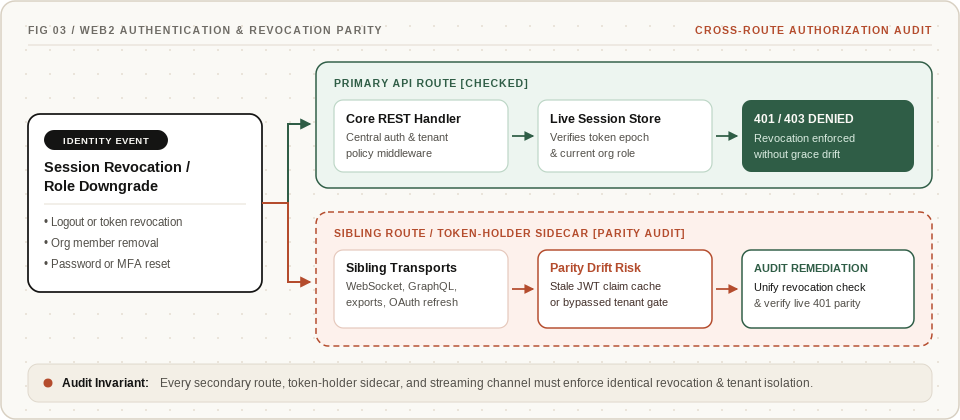
High-severity breaches frequently occur in clean, up-to-date codebases with zero public CVEs. Automated tools cannot infer whether a revoked session still authenticates a WebSocket sidecar, whether a preview container can forge a control-plane request, or whether a vault callback breaks share conservation.

  • Authorization parity drift: Primary REST routes reject revoked roles while sibling GraphQL, export, or refresh handlers accept stale claims.
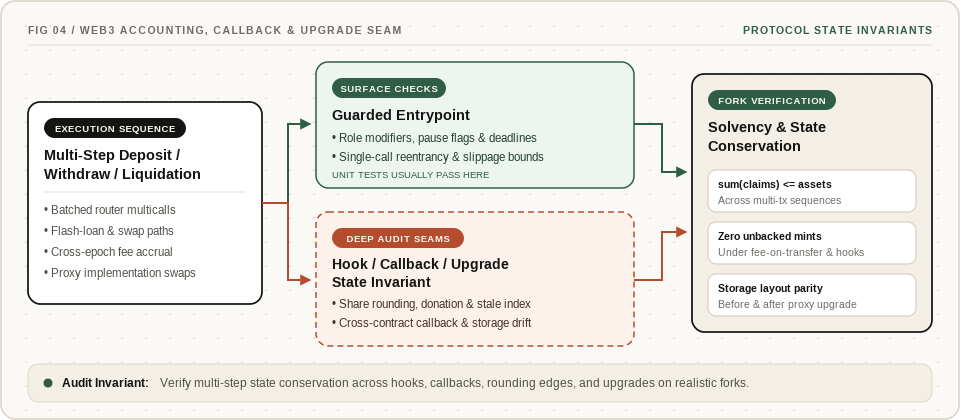
  • Multi-step state invariants: Single-call unit tests pass while batched transactions, callbacks, or proxy upgrades violate accounting bounds.
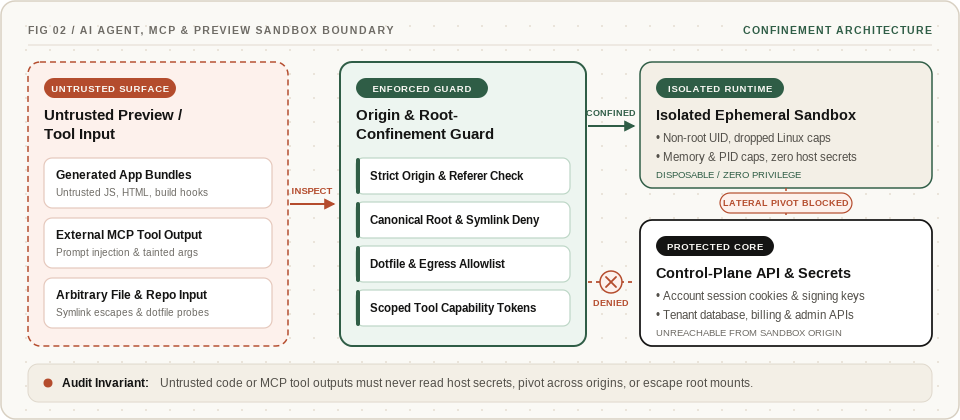
  • Sandbox and tool seams: Untrusted AI-generated previews or MCP tool responses cross origin or filesystem boundaries into host credentials.
  • Falsification discipline: Every candidate issue is tested against a clean control case so engineering teams spend time only on real risk.

Compliance & Governance Readiness Anchor

Engineering leaders often pair deep manual testing with upcoming enterprise customer reviews and regulatory readiness milestones. Structured offensive testing produces clear technical evidence that closes real attack paths rather than checking boxes.

  • India DPDP Act technical safeguards: Validating tenant data isolation, access revocation, and minimization boundaries for personal data pipelines.
  • CERT-In incident hygiene: Hardening authentication telemetry, audit logs, and boundary controls so incident detection and forensics remain reliable.
  • SOC 2 & ISO 27001 readiness: Supplying scoped manual penetration reports, minimal remediation diffs, and independent re-test letters for engineering control reviews.
Scope clarity: DomainFA Security provides technical manual security audits, remediation engineering, and re-test verification letters. Formal statutory audits or CPA attestations remain with your independent accredited statutory or CPA firm.

Practice Areas

Four core offensive security practice pillars.

Each engagement is scoped around the actual trust boundaries and runtime architecture of your system, whether a single protocol release or a full-stack platform.

01 / PROTOCOLS

Web3, Smart Contracts & Consensus

Manual invariant and state-machine audits for EVM, Solana, and Cosmos protocols. Focus areas include vault accounting and rounding edges, liquidation cascades, cross-chain bridges, callback re-entry, proxy storage-slot parity, and governance execution paths.

Solidity / EVM Solana / Anchor Cosmos SDK Fork PoCs
02 / APPLICATIONS

Web2, APIs & Identity

Deep testing of multi-tenant authorization boundaries, session revocation parity, OAuth/OIDC and JWT lifecycles, webhook signature verification, billing and quota integrity, race conditions, and complex state transitions across REST, GraphQL, and WebSockets.

Auth & Tenant Isolation OAuth / OIDC Go / TypeScript Payment Integrity
03 / AGENTIC SYSTEMS

AI Agents, MCP & Sandboxes

Security review of Model Context Protocol servers, autonomous tool-execution loops, untrusted code and website preview sandboxes, indirect prompt-to-action injection paths, filesystem root confinement, secret hygiene, and outbound network egress controls.

MCP Servers Preview Isolation Tool Privilege Bounds Container Hardening
04 / INFRASTRUCTURE

Cloud, Infrastructure & Native Systems

Source and runtime hardening across C, C++, Rust, and Go network daemons, binary parsers, reverse-proxy and TLS routing layers, container isolation, Kubernetes and cloud IAM boundaries, CI/CD artifact signing, and authoritative DNS configurations.

C / C++ / Rust / Go Reverse Proxies Cloud IAM Authoritative DNS

Methodology & Trust Boundaries

Structured verification from state modeling to signed re-test.

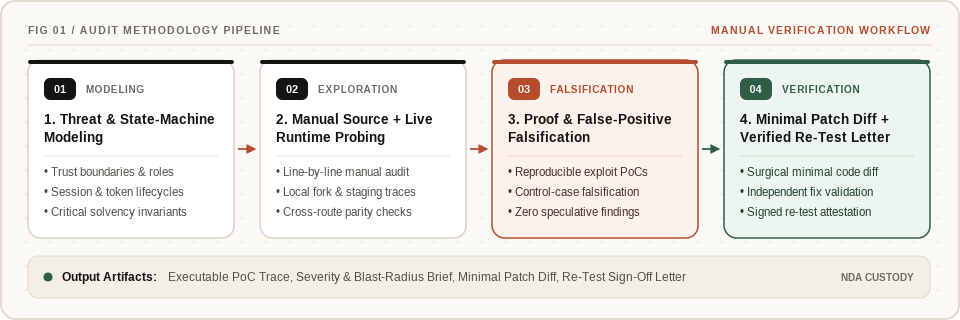
Every audit follows a four-stage verification flow designed to surface non-obvious seam bugs, falsify false positives early, and hand your engineers minimal diffs ready to merge.

Four-stage manual security audit methodology flow from threat modeling to verified re-test letter
Audit Engagement Pipeline Threat modeling, manual source and runtime probing, PoC falsification, and verified re-test sign-off.
AI agent, MCP, and preview sandbox isolation boundary diagram
AI Agent, MCP & Preview Sandbox Confinement Separating untrusted tool outputs and generated bundles from control-plane credentials and host mounts.
Web2 session revocation and sibling route authorization parity diagram
Web2 Session Revocation & Sibling Route Parity Auditing secondary transports and token-holder sidecars against primary route revocation guarantees.
Web3 protocol accounting, callback, and upgrade state invariant seam diagram
Web3 Accounting, Callback & Upgrade Seams Testing multi-step sequences across hooks, rounding edges, and proxy upgrades on live-state forks.

Deliverable Standard

Illustrative redacted audit finding preview.

Below is a fully fictional example (AcmeVault) illustrating the concise engineering format delivered for every verified finding.

FICTIONAL SAMPLE: ACMEVAULT FINDING AV-01 SEVERITY: HIGH PATCHED & RE-VERIFIED
VaultRouter.sol : withdrawFor()

Finding Summary

withdrawFor() dispatches an external token callback to the recipient before decrementing delegated vault shares. A malicious receiver contract can re-enter withdrawFor() within the same transaction while the pre-burn share balance remains intact.

Severity & Blast Radius

Impact: Violates vault conservation invariant (sum(redeemedAssets) <= depositedPrincipal) up to available liquid reserves in the vault pool. Preconditions: Any depositor holding non-zero shares with a callback-enabled asset or receiver hook.

Reproducible Trace (Isolated Fork)

1. Attacker calls deposit(100_000 USDC) -> receives 100_000 shares
2. Attacker calls withdrawFor(attacker, 100_000 shares)
3. Vault transfers 100_000 USDC -> receiver hook fires before share burn
4. Hook re-enters withdrawFor(attacker, 100_000 shares) -> passes balance check
5. Post-tx state: attacker holds 200_000 USDC; vault liquid reserve short by 100_000 USDC

Minimal Patch Diff

@@ -142,8 +142,9 @@
-function withdrawFor(address to, uint256 shares) external {
+function withdrawFor(address to, uint256 shares) external nonReentrant {
     uint256 assets = previewRedeem(shares);
     require(shareBalance[msg.sender] >= shares, "INSUFFICIENT_SHARES");
-    assetToken.safeTransferWithCallback(to, assets);
-    shareBalance[msg.sender] -= shares;
+    shareBalance[msg.sender] -= shares;
+    totalShares -= shares;
+    assetToken.safeTransferWithCallback(to, assets);
     emit Withdrawn(msg.sender, to, shares, assets);
 }
VERIFIED RE-TEST SIGN-OFF (ILLUSTRATIVE)
Re-executed fork exploit against patched commit a1b2c3d: second withdrawal reverts with INSUFFICIENT_SHARES; invariant fuzz suite passes across 25,000 sequences.
STATUS: CLOSED
Security Research

Published engineering and security notes.

Public technical writeups on isolation boundaries, defensive patterns, and real-world hardening from the DomainFA Journal.

Direct Intake & Disclosure

Request an audit scope or reach the disclosure desk.

Share your repository scope, deployment URL, or target window below. An engineer from our security desk replies within 1 business day with scoping questions and timeline availability.